Skip to content

2026

Barcelona 2026 International Conference
“Power and Care: Enactive Approaches and Critical Social Philosophy”
The application deadline for talk and poster proposals has now passed. Standard tickets are still available for general attendees!
We would like to thank everyone who submitted a proposal to for their time and interest. We are currently reviewing all applications and will be in touch as soon as possible with further information. We appreciate your patience during this process.
Registration is now open! Contribute to the exchange of ideas and join the gathering as a general attendee.
Contents
- Introduction
- Programme overview
- People
- Programme schedule
- Location and accessibility
- Registrations
- Our sponsors
Introduction
We are thrilled to announce an upcoming international conference on “Power and Care: Enactive Approaches and Critical Social Philosophy”, a joint collaboration between Mind & Life Europe and the Universitat Pompeu Fabra in Barcelona.
The conference will take place from 28th to 30th May 2026, with arrival and welcome on the 27th and departure on the 31st. Bringing together scholars, scientists, researchers, academics, and practitioners from a wide swath of disciplines, this event seeks to foster dialogue at the interstices and frontiers of existing bodies of knowledge, in the hopes of reaching toward creative and hitherto unimagined responses to the crises of power in our world today.
This gathering will bring the enactive approach, writ large, into conversation with critical social theory, with a distinct focus on questions of power and care. Acknowledging the critical times in which we are living, and the rapidly shifting social orders and ecologies of our planet, it seems ever more urgent to consider how enaction might engage — and is already engaging — with social and political problems, and how critical social thought might in turn enrich, enlarge, and to some extent, ground the currents of enactive thinking. The historical underpinnings of enaction, its status as a critical response to prevailing scientific norms, and its emphasis on the embeddedness of perception, affect, cognition, and meaning, set the stage for a productive dialogue with critical social theories, which take as their premise the situated and relational character of meaning, particularly within systems of power. The hope is that these two epistemological ecosystems will mutually illuminate each other, and in their interaction, help to provide more nuanced and, indeed, more caring responses to the social, political, and ecological dilemmas we are witnessing today.
Programme Overview
As you will read in the Call for Papers (below), the conference will take place over three days and has been conceived in such a way as to trace a loose progression from the biological and ecological (“The Politics of Life and the Environment”), to the cognitive, bodily, and affective (“Mind, Body, and the Sociopolitical Shaping of Experiences”), to the more explicitly social, political, and linguistic dimensions of experience (“Political Agency and Social Philosophy”).

The programme will be centred around three days of panel presentations and general discussion. The status of enactive engagements with social and political issues will be scrutinised while providing opportunities for critical reflection, dialogue, and bridge-building to neighbouring discourses around common concerns.
The questions for each day are meant to be generative and allow for a significant degree of crossover and reverberation between the three days. The full list is available in the concept note below.
In addition to the keynote panellists, we expect around 300 participants from around the world, who have submitted submit paper or poster proposals of their own (the deadline for this has now passed) or applied as a general attendee (registration is still open).
People
Keynote speakers
In alphabetical order:
- Prof Raquel Bouso
- Prof Laura Candiotto
- Prof Bruce Clarke
- Dr Katya Colmenares Lizárraga
- Dr Elena Cuffari
- Prof Luisa Damiano
- Dr Hanne De Jaegher
- Prof Ezequiel Di Paolo
- Prof Michelle Maiese
- Dr Marek McGann
- Dr Laura Mojica
- Prof Adrian Palacios
- Prof John Protevi
- Dr Martin E. Rosenberg
- Prof Jan Slaby
- Dr Alejandra Rossi
- Prof Konrad Werner
Planning committee
- Dr Constanza Baquedano
- Prof Raquel Bouso = Organising partner
- Prof Laura Candiotto
- Prof Bruce Clarke
- Dr Hanne De Jaegher = MLE Scientific Advisor
- Prof Ezequiel Di Paolo
- Dr Laura Mojica
- Prof Adrian Palacios
- Dr Martin E. Rosenberg
contemplative guides & cultural events speakers
- Arquitecturas Afectivas
- Frederic Amat
- Parés Baltà
- Amy Cohen Varela
- Mauro Gil-Fournier
- Alem Makonnen
- Ferran Mestanza
- Agustín Pániker
- Jon Kabat-Zinn
- Prof Amador Vega
Programme schedule


Conference Brochure
Location and accessibility
Full address: Universitat Pompeu Fabra,
Ciutadella Campus,
Ramon Trias Fargas 25-27,
08005 Barcelona,
Spain

For detailed directions, transportation options, and maps, please visit the Ciutadella campus website.
Registrations
Standard tickets are still available for general attendees!
Below you can find the registration costs for the conference. Please note that these costs are payable during the registration phase, after the submission deadline ends. Details about how to make your payment will be shared very soon. Some scholarships are available for students, people who are retired, and people from developing countries.
Don’t forget: by becoming an MLE Friend (just €50/year for individuals), you’ll receive reduced rates for this conference as well as access to exclusive webinars and a circle of like-minded people. Join our community here!

Our sponsors
We are grateful to share that “Power and Care: Enactive Approaches and Critical Social Philosophy” is very generously sponsored by Institut de Cultura and Centre for Aesthetics, Religion and Contemporary Culture at Universitat Pompeu Fabra; Editorial Kairós; DondeGo; and Pares Baltà.
Our evening cultural events are made possible through the support of a grant from Templeton Religion Trust, awarded via the PROGRAM IN THE STUDY OF MYSTICISM (PRISM) at Tampere University.

If you are interested in promoting dialogue addressing ecological, social, and ethical challenges and would like a meaningful platform to demonstrate your organisation’s commitment to social change, we invite you to become a sponsor of our event. If you are interested, please reach out to gerard.puig01@estudiant.upf.edu and thibaultarthurtien@gmail.com.


Constanza Baquedano, PhD, is a neuroscientist and Assistant Professor at Universidad Adolfo Ibáñez (Chile), where she is part of the Centro de Neurociencia Social y Cognitiva (CSCN). She trained in biochemistry and completed her PhD in Neuroscience at Université Claude Bernard Lyon 1 (France). Her work lies at the intersection of contemplative science, human–nature connection, and non-ordinary states of consciousness.
Her research integrates neuroscience, phenomenology, and contemplative approaches to study how lived experience relates to brain and behavioral dynamics. She combines experimental methods (e.g., EEG/ERPs) with qualitative and micro-phenomenological approaches. She currently leads interdisciplinary projects on psilocybin-assisted therapy and on the role of nature-based experiences in well-being and ecological behavior.
Her work aims to bridge scientific and experiential perspectives, understanding cognition as situated, embodied, and relational.

Raquel Bouso is currently serving as an associate professor of philosophy in the Department of Humanities at Pompeu Fabra University and as the university’s vice-rector for culture and communication. She specializes in intercultural and Asian philosophy, particularly Japanese philosophy. She earned her doctorate with a thesis on the notion of emptiness in the philosophy of Nishitani Keiji and her publications primarily address the Kyoto School and Zen Buddhism. Her research covers several areas, including ontology, hermeneutics, aesthetics, and religion. She studies the transmission of humanistic knowledge, the survival of sacred languages in the modern secular world, and new forms of thought emerging from encounters between different cultural traditions. She is a member of academic networks such as ENOJP and ENBCS and is affiliated with the CERCCA Center of Studies. She is currently conducting research for the project entitled “Countermovement: Mysticism Against the Grain” (PRISM-Templeton Foundation).

Laura Candiotto is Associate Professor in Moral Philosophy at the University of Cagliari (IT) and at the Center for Ethics of the University of Pardubice (CZ). She is the Editor-in-Chief of Hyphae: The Journal of Mind & Life Europe. She has developed a perspective on emotions as “in-between”, bridging her expertise in communities of inquiry and the enactive approach to participatory sense-making to loving relationships and care ethics. She is very much interested in the potential transformative power of the affective experience under the weight of oppression, especially in relation to ecological issues. She sheds light into the tensional affective character of sense-making through the hermeneutical tool of “emotional friction”, understood from a phenomenologically rich existential perspective. Her book Emotional Friction: Facing the Responsibility Problem will be published in 2027. Websites: www.emotionsfirst.org; https://upce.academia.edu/LauraCandiotto

Bruce Clarke is Paul Whitfield Horn Distinguished Professor of Literature and Science Emeritus at Texas Tech University and a Blumberg/NASA Chair in Astrobiology at the Library of Congress. His writings explore critical ecologies of narrative, systems theory, posthumanism, and Gaia theory. His most recent books are Writing Gaia: The Scientific Correspondence of James Lovelock and Lynn Margulis, coedited with Sébastien Dutreuil (Cambridge 2022), and Gaian Systems: Lynn Margulis, Neocybernetics, and the End of the Anthropocene (Minnesota 2020). Previous monographs include Neocybernetics and Narrative (Minnesota 2014), Posthuman Metamorphosis: Narrative and Systems (Fordham 2008), and Energy Forms: Allegory and Science in the Era of Classical Thermodynamics (Michigan 2001). With Henry Sussman he co-edits the book series Meaning Systems, published by Fordham University Press. Since 2019, with David McConville he has co-curated the website Gaian Systems: Planetary Cognition Lab for transdisciplinary research communicating modes of participation with and within Earth’s biotic and metabiotic processes. For more information: brunoclarke.net.

Katya Colmenares is a Mexican philosopher of liberation and holds a Ph.D. in Humanities with a specialization in Philosophy. Between 2020 and 2024, she served as coordinator of the Virtual Training Program at the National Institute for Political Education of the Movimiento de Regeneración Nacional (MORENA) party. From 2017 to 2020, she was director of the undergraduate and master’s programs in Philosophy at the Intercontinental University of Mexico.
She is currently director of the Enrique Dussel Library at Akal Publishing, where she is responsible for overseeing the publication of the posthumous works of the Argentine-born philosopher naturalized as Mexican. This year, she published the first book in this collection: Toward a Theory of Modernity/Coloniality.
She has published various works related to epistemological decolonization, dialectical logic, critical political philosophy, and the method of critical science within the tradition of the Philosophy of Liberation. She is the author of the book Toward a Science of the Logic of Liberation: Elements for a Critique of Trans-Ontological Reason. She is also the editor of the Anthology of Philosophy of Liberation by Enrique Dussel (Akal, 2021), and co-author, together with Ramón Grosfoguel, of the books Toward a Community of Life and Toward a Decolonization of Modern Science.

Elena Cuffari is Associate Professor of Psychology and Scientific and Philosophical Studies of Mind at Franklin & Marshall College (United States). A philosopher of cognitive science with a background in phenomenology, pragmatism, feminist philosophy, and cognitive linguistics, she has authored and co-authored papers on the enactive approach to language, gesture, metaphor, improvisation, and narrative pacing. She has written about habit, hope, and interactive dynamics from a feminist perspective. She is co-author of Linguistic Bodies: The Continuity Between Life and Language (2018) with Ezequiel Di Paolo and Hanne De Jaegher, which elaborates from their earlier paper, "From Participatory Sense-making to Language: There and Back Again." The two publications articulate for the first time how core enactive principles of cognition and social cognition in living beings can serve as a foundation for approaching language, not first conceived of as words and sentences, but as materially concretized practices of bodies co-navigating meaningful worlds.

Luisa Damiano is Professor of Philosophy of Science at IULM University (Milan), where she directs the PhD School for Communication Studies and co-directs CRiSiCo (Research Center on Complex Systems). Her research focuses on cybernetic epistemologies and the epistemology of the sciences of the artificial, with particular attention to autopoietic and enactive approaches to cognition, mind–technology relations, and emergent technologies, especially in the fields of social robotics and synthetic biology. Her recent work investigates distributed cognitive systems as radically embodied processes, with a specific focus on the social and environmental sustainability of emerging technologies. Drawing on autopoietic, enactive, and Gaian perspectives, she examines how artificial systems can be conceived and integrated as participative actors in the sustainable reconfiguration of life and cognition, in response to the demands of systemic responsibility.

Dr Laura Mojica is a philosopher of mind and cognitive science working within the enactive approach. Her research focuses on normativity, the sociomaterial constitution of agency, and their ethical and social implications. She develops an embodied account of normativity that shows how norms are lived through action, affectivity, and shared practices rather than treated as abstract rules detached from experience.
Her recent work examines how tools and material environments take part in the formation of agency. Through philosophical accounts of incorporation, developed together with Ezequiel Di Paolo, and of how tools and artifacts are constituted, she shows how our capacities to act, perceive, and make sense of the world become ingrained in the sociohistorically shaped material environments we share with others. Building on this work, her current research turns to broader ethical and social questions, including recognition, responsibility, and normative conflict, with a focus on how embodied practices and material conditions can both stabilize existing social norms and open possibilities for critique and change.
She is currently a Juan de la Cierva Postdoctoral Fellow at the IAS Research Center for Life, Mind, and Society at the University of the Basque Country.

Hanne De Jaegher is a philosopher and cognitive scientist. She notably developed the theory of participatory sense-making, together with Ezequiel Di Paolo. Participatory sense making theory is being used across academic and practical disciplines, from neuroscience to the arts and beyond. De Jaegher also researches and writes about autism and dementia, in close connection with people with lived experience, and innovates interactive methodologies. She thinks a lot about loving and knowing as both existential, tension-full relations, and how they can illuminate each other in philosophy, cognitive science, and our (intersubjective) lives. With Ezequiel Di Paolo and Elena Cuffari, she co-authored Linguistic Bodies: The Continuity between Life and Language (MIT Press, 2027). Currently, she is working as an in(ter)dependent scientific advisor and teacher, among other roles, for Mind & Life Europe.

Adrian Palacios is Professor of Neuroscience at the Universidad de Valparaíso and President of the Instituto de Sistemas Complejos de Valparaíso. He completed his doctorate at the Université Pierre et Marie Curie (Paris VI) in 1990 under the direction of Francisco Varela, with whom he collaborated during the 1980s on the comparative biology of color vision. After postdoctoral research at Yale, he returned to Chile to build one of the country's leading programs in visual neuroscience and complex systems. His work spans retinal dynamics, comparative color vision, aging biomarkers, and computational neuroscience, and he has co-edited La Ciencia del Ser: Las Rutas de Francisco Varela (2011) with Amy Cohen-Varela. He has served on the Chilean Ministerial Advisory Council for Science and chairs the IBRO Latin America Regional Committee, sustaining Varela's commitment to science as a situated, public endeavor.
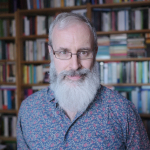
Ezequiel A. Di Paolo is a Research Professor working at Ikerbasque, the Basque Science Foundation in Spain and a Visiting Professor at the Department of Informatics, University of Sussex. His interdisciplinary research on embodied and enactive approaches to life, mind, and society integrates work from cognitive science, neuroscience, phenomenology, philosophy of mind, and computational modelling. His research focus is on enactive theory, embodied intersubjectivity, language, ethics, and participatory sense-making. He is (co)author of over 200 publications, including the books Sensorimotor Life: An Enactive Proposal (2017, Oxford University Press) and Linguistic Bodies. The Continuity between Life and Language (2018, MIT Press). He is co-editor of the recently published annotated edition of Francisco Varela’s Principles of Biological Autonomy (2025, MIT Press).

Michelle Maiese is Professor of Philosophy at Emmanuel College in Boston, Massachusetts. Her research focuses on 4e approaches in philosophy of mind, the emotions, and philosophy of psychiatry. She is the author of Embodiment, Emotion, and Cognition (2011), Embodied Selves and Divided Minds (2015), and Autonomy, Enactivism, and Mental Disorder (2022), and the co-author of Embodied Minds in Action (2009) and The Mind-Body Politic (2019).

Marek completed his D.Phil. in the Philosophy of Cognitive Science at the University of Sussex, and is currently senior lecturer in Psychology at Mary Immaculate College, Limerick.
His principal research is theoretical work within the enactive approach. He has a particular interest in conceptions of the body, and the complementarity or mutuality between body and environment. Marek also draws heavily on work from the domain of ecological psychology, both as it was developed by James and Eleanor Gibson and their students, but also from the work of Roger and Louise Barker, and the research team of the Midwest Psychological Field Station. He has a related interest in critical considerations of theory and scientific practice in psychology more broadly.
Marek co-convenes the ENSO Seminars, a series of online seminars with researchers from enactive and ecological cognitive science.

John Protevi is emeritus professor in French Studies and in Philosophy at Louisiana State University. His books are published by University of Minnesota Press; the two most recent are Edges of the State (2019) and Regimes of Violence (2025). His work combines concepts, methods, and themes from enaction, dynamic systems theory, French post-structuralism (primarily Gilles Deleuze and Félix Guattari), plus critical social theory (Clastres, Foucault, James C Scott). In addition to all that, Regimes of Violence wove in work by anthropologists who question the ubiquity of warfare in early human life.

An independent scholar since 2002, Martin E. Rosenberg (U. Michigan 1990) wrote his dissertation on the cultural work across the arts of the scientific concept of “self-organization” or “emergence.” His article “Portals in Duchamp and Pynchon” (1994) was probably the first to explore the aesthetic and political implications of The Embodied Mind (1991). Having addressed the cognitive and scientific epistemological implications of the game of chess, he similarly addresses emergent cognitive behaviors visible in jazz improvisation, and, more generally, how environment and culture affect cognition. He has been translated into Spanish, Portuguese, French and Hungarian. Martin also published on metaphor in transdisciplinary inquiry, designed and theorized about hypermedia, and co-directed the first digital global academic conference—AG3-Online: The Third International Arakawa and Gins Architecture and Philosophy Conference (2010). Originally trained at the Berklee College of Music with 40 compositions to his credit, he performed until recently in the Pittsburgh area. You can view Martin's academic webpage here: https://webplus.academia.edu/MartinERosenberg

Alejandra Rossi C. is an associate professor, Director of Ph.D in Psycholgy at Universidad Diego Portales (Santiago, Chile) and a Principal Investigator at the Center for Research and Innovation in Childhood, Adolescence, Resilience and Adversity (a National Interest Research and Development Centers of Excellence), where she leads research at the intersection of neuroscience, social interaction and mental health. Trained in clinical psychology, cognitive science, and neuroscience, her program integrates Mobile Brain/Body methods- EEG time-frequency together with endocrinology, ECG, and eye tracking. Conceptually, her work is grounded in 4E/3E approaches, with an explicit evolutionary lens. She supervises interdisciplinary teams and mentors graduate researchers in open, reproducible neuroscience and community-engaged research across Chilean contexts. She collaborates with public health and policy stakeholders to translate basic science into care- and equity-oriented interventions.

At a time of deep political and societal change, I could think of no better conversation to have than with philosophers Laura Candiotto and Jan Slaby, who belong to a cohort of enactive thinkers working to put affect back in the centre of philosophy and showing us the stark dangers of depoliticising affect and enactive science more generally. They both ask, in different ways: what are we eclipsing when we study emotion as though it were neutral? What are the unseen costs of a depoliticised and decontextualised understanding of affective habits? How can we hold up a politics of vulnerability in the midst of a global order that is intent on optimisation and domination? What unites Jan and Laura in their work today is a clear understanding that “the human mind is a political matter as much as anything.” (Slaby 2016)

Konrad Werner is a professor of philosophy at the University of Warsaw in Poland and a Humboldt Fellow at the University of Bayreuth in Germany. His research focuses on embodied/enactive cognition combined with social ontology and institutional theory. His latest book is "The Ontology of Ecological Cognition" (Routledge 2025).
For more information, please refer to his websites: konradwerner.com and philpeople.org/profiles/konrad-werner
31-05-2026 06:00 PM