Skip to content

2023

MLE Friends Talk with Hanne De Jaegher
“Between Theory and Practice: Enaction and the Caring Professions”
How to go in search of caring — the caring that we already know, the caring that we can still learn, and the caring that is in fact an ongoing learning between us?
In this talk, Dr De Jaegher will attempt to lay bare some of the logic and principles of the enactive approach as an engaging epistemology, through some personal stories about dementia, as well as some elements from research and practice, especially in the area of autism dialogue.
She will show the enactive logic at work in the mutual rapprochement of, or the space between, practice and theory. There seems to be an increasing desire from practitioners in the helping, clinical, and pedagogical professions to better understand enactive theory and to ground their practice in it. At the same time, enactive theory also benefits from interacting with these forms of expertise, which are, in the most general sense, human expertise. Thinking about this space in-between will allow us to deepen our understanding of the tensions between various poles of co-determination, such as carer and cared-for, student and teacher, knowing and not-knowing, experience and expertise.
If you would like to attend, please join mLE Friends Here!
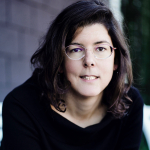
Hanne De Jaegher is a philosopher and cognitive scientist. She notably developed the theory of participatory sense-making, together with Ezequiel Di Paolo. Participatory sense making theory is being used across academic and practical disciplines, from neuroscience to the arts and beyond. De Jaegher also researches and writes about autism and dementia, in close connection with people with lived experience, and innovates interactive methodologies. She thinks a lot about loving and knowing as both existential, tension-full relations, and how they can illuminate each other in philosophy, cognitive science, and our (intersubjective) lives. With Ezequiel Di Paolo and Elena Cuffari, she co-authored Linguistic Bodies: The Continuity between Life and Language (MIT Press, 2027). Currently, she is working as an in(ter)dependent scientific advisor and teacher, among other roles, for Mind & Life Europe.
28-09-2023 07:30 PM